

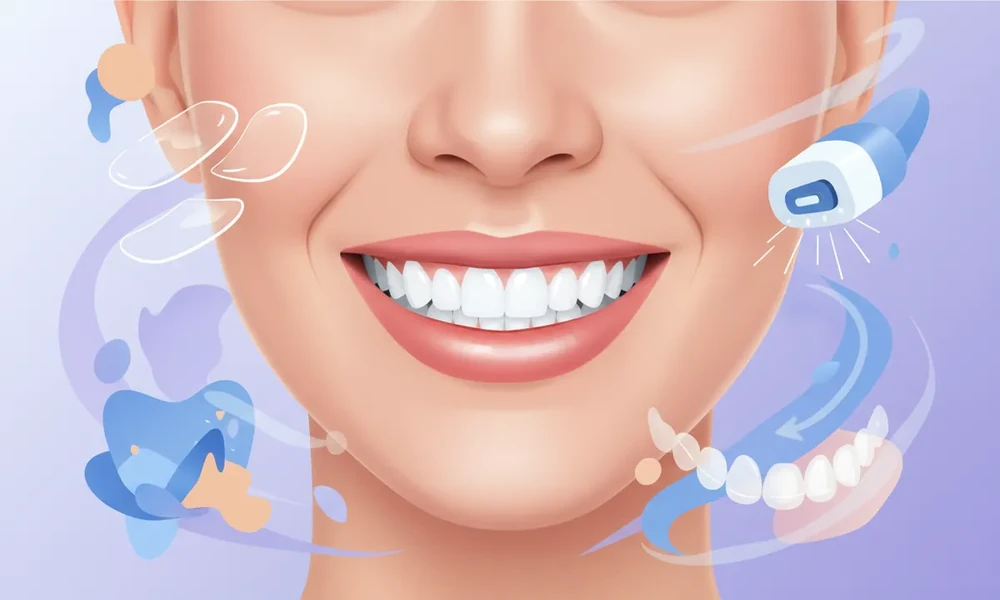
You might be feeling self conscious every time you see your teeth in a photo, or you catch your reflection and notice that one chipped tooth, the stains from coffee, or that little gap that has always bothered you. Maybe you have put off doing anything about it because you assume it will be too expensive, too painful, or just “too much” to deal with on top of everything else in life, but a dentist in South Calgary can help you explore options that fit your needs and comfort level.
At the same time, you probably know how different you feel on the rare days you truly like your smile. You talk more freely, you laugh without covering your mouth, you feel a bit more like yourself. Because of this tension, you might wonder whether a gentle, realistic smile makeover at a family dental practice could help, without turning your life upside down.
Here is the short answer. Most family dentists offer a handful of simple, step by step cosmetic and general treatments that can brighten, straighten, repair, or reshape your teeth. These are usually done gradually, often with a focus on comfort and budget, and they are designed for real people with jobs, kids, and busy schedules, not for celebrities on a movie set.
What is a “smile makeover” at a family dentist, really?
It helps to clear up one thing first. A smile makeover is not always a huge, dramatic change. In a family dental setting, it usually means combining a few everyday treatments to help your teeth look cleaner, more even, and more natural, while also keeping them healthy.
So where does that leave you? It means you can think in terms of small, specific problems and simple solutions, instead of one big overwhelming project. For example, you might whiten the teeth that have darkened over time, repair one or two worn edges, and replace an old metal filling that shows when you smile. Each step builds on the last.
Here are five common smile makeover procedures you will often find in a general and cosmetic dentist’s office, and how they might fit into your situation.
1. Professional teeth whitening for stained or dull teeth
Maybe your teeth used to be lighter, but years of coffee, tea, red wine, or smoking have left them yellow or uneven in color. Drugstore whitening strips might help a little, but they often give patchy results or cause sensitivity if you use them too often.
Family dentists frequently offer professional whitening that uses stronger, carefully controlled products. According to the American Dental Association, whitening done under a dentist’s supervision is much more predictable and can be customized for your teeth and your level of sensitivity. You can read more about safe teeth whitening approaches from the ADA here.
Whitening can be a powerful first step. Many people find that once their teeth are a bit brighter, they feel motivated to address small chips or spacing issues next, instead of feeling discouraged before they even start.
2. Tooth colored fillings that blend into your smile
Old silver colored fillings can sometimes show when you laugh or speak. They might be perfectly functional, but they can draw attention to areas of your mouth that you would rather keep invisible. Modern family dentistry often uses tooth colored resin fillings that match the shade of your natural teeth.
These composite fillings do more than look better. They bond to the tooth surface, which can help support the remaining structure. The National Institute of Dental and Craniofacial Research explains how different filling materials work and when they are appropriate. You can explore those details on this NIDCR page.
For a smile makeover, your dentist may suggest replacing only the fillings that are visible when you talk or smile. That way you improve your appearance while still being thoughtful about cost and preserving healthy tooth structure.
3. Dental bonding for chips, gaps, and worn edges
Maybe one front tooth has a tiny chip from years ago, or you have a small gap that has always bothered you even though your bite is fine. These are the kinds of things that can quietly bother you every single day, yet they are often very simple to fix.
Dental bonding uses a tooth colored resin that is shaped by the dentist directly on your tooth. It can close a small gap, smooth a rough edge, or cover a small discolored area. In many cases, bonding can be done without numbing, and it usually takes one visit.
Because bonding is relatively affordable and conservative, it is a common tool in an affordable smile enhancement plan. Your dentist might suggest whitening first, then bonding, so the resin can be matched to your new, lighter tooth color.
4. Porcelain veneers for more dramatic front tooth changes
Sometimes the concerns are bigger. You might have several front teeth that are worn, deeply stained, or misaligned in a way that braces alone would not fully correct from a cosmetic standpoint. In these cases, porcelain veneers may be part of a cosmetic dentistry treatment plan.
Veneers are thin shells of porcelain that cover the front of the teeth. They can change color, shape, and length, and they are designed to look very natural when done thoughtfully. Veneers usually require some reshaping of the tooth surface and more planning than bonding, so they are a bigger commitment, both financially and medically.
This is where a family dentist’s approach can be helpful. Instead of suggesting veneers for every tooth, your dentist might blend treatments. For example, whitening for the full smile, bonding for minor flaws, and veneers only on the two or four teeth that need the most change. That can give a balanced result without treating more teeth than necessary.
5. Orthodontic options for crooked or crowded teeth
If your teeth overlap, are crowded, or have noticeable gaps, you may feel that no amount of whitening or bonding will fully solve the problem. You might also feel nervous about the idea of traditional metal braces as an adult.
Many family dental practices now offer clear aligner systems or coordinate closely with orthodontists. Straightening teeth is not just cosmetic. It can make brushing and flossing easier, which supports long term health. From a smile makeover perspective, orthodontic treatment can be the foundation that allows all the other cosmetic touches to look more natural and last longer.
For some people, a short course of limited orthodontics is enough to align the most visible teeth. After that, small amounts of bonding or contouring can refine the final look without the need for more invasive procedures.
How do these smile makeover procedures compare in real life?
It is normal to wonder about cost, time, and maintenance. You do not need exact numbers to start thinking clearly. You just need a sense of how the common options stack up next to each other.
| Procedure | Main purpose | Typical time commitment | Longevity with good care | Common concerns |
|---|---|---|---|---|
| Professional whitening | Lighten overall tooth color | One in office visit or a few weeks with custom trays | 1 to 3 years before touch up often needed | Temporary sensitivity in some patients |
| Tooth colored fillings | Repair decay and improve appearance | One visit per tooth | Many years, varies by size and location | May need replacement over time |
| Dental bonding | Fix chips, small gaps, minor shape issues | Often one visit for several teeth | 3 to 10 years, depends on habits and bite | Can stain or chip more easily than porcelain |
| Porcelain veneers | Change color, shape, and alignment of front teeth | Usually 2 to 3 visits | 10 to 15 years or longer with careful care | Higher cost, irreversible tooth changes |
| Orthodontic treatment | Straighten and align teeth | Several months to a few years | Lifetime, with consistent retainer use | Requires daily commitment and follow up |
None of these options are “perfect” for everyone. Each has tradeoffs. The right mix for you depends on your goals, your budget, your schedule, and your comfort with maintenance over time.
What practical issues should you think about before changing your smile?
Cosmetic changes touch more than just your appearance. They affect your daily routine, your finances, and sometimes your self image. For example, if you are already feeling stretched, a long orthodontic plan might feel emotionally heavy, even if it is clinically a good idea. On the other hand, if you are anxious about drilling, whitening and bonding might feel like a gentler entry point.
It can also help to consider your habits. If you grind your teeth at night, certain procedures will need extra protection, such as a night guard. If you smoke or drink a lot of dark beverages, whitening or bonding may need more frequent touch ups.
Maintenance is part of the picture. The National Library of Medicine’s MedlinePlus has clear guidance on routine care like brushing, flossing, and checkups, which becomes even more important after cosmetic work. You can find practical home care tips on this MedlinePlus guide.
Three steps you can take right now toward a healthier, more confident smile
1. Get clear on what actually bothers you
Before you see any dentist, stand in front of a mirror and smile as you normally do. Then smile a bit wider. Notice what truly bothers you and what you honestly do not care about. Is it color, one crooked tooth, chips, old fillings, or something else. Writing down a short list can help you communicate clearly and avoid getting swept into treatments you never wanted.
2. Schedule a consultation focused on both health and appearance
When you contact a general and cosmetic dentist, say that you want to talk about both the health of your teeth and your cosmetic concerns. Ask for photos or mock ups if available. Ask what they would do if they were working with a limited budget over a year or two. A thoughtful dentist will usually start by stabilizing any decay or gum issues, then suggest a stepwise cosmetic plan that fits your life.
3. Start with the smallest, highest impact change
Instead of trying to do everything at once, consider starting with the one change that would make you feel noticeably better when you look in the mirror. For many people this is whitening or fixing a prominent chip. Once you see that improvement, you can decide calmly whether you want to continue, pause, or adjust your plan. This approach protects your finances and your emotional energy.
Moving toward a smile that feels like “you” again
You do not need a perfect smile. You deserve a smile that feels comfortable, clean, and authentic to you. Whether your needs are simple or more complex, everyday family dental procedures like whitening, bonding, fillings, veneers, and orthodontics can be combined into a gentle smile makeover treatment that respects your limits and your goals.
You are allowed to take this one step at a time. You are allowed to ask questions, say no to what does not feel right, and say yes to changes that would lift your confidence. A caring general and cosmetic dentist can guide you, but you are the one who decides what your “after” looks like.
