

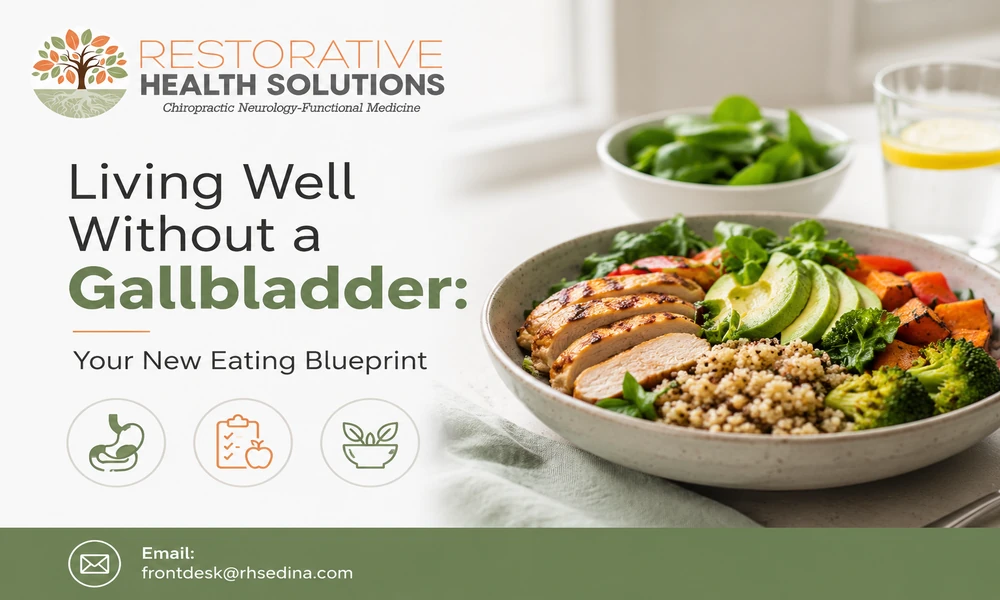
It alters your body fat digestion when you lose your gallbladder. Your liver continues to produce bile, but now it lacks an attic/room to house stuff. Instead, bile drips endlessly into your digestive tract. As a result, rich foods could lead to bloating, gas, or urgent visits to the restroom.
Adjusting your diet after gallbladder removal does not have to mean eating bland food for the rest of your life. That simply means you require a new way at your plate. This is how you ensure your digestion runs like a well-oiled machine.
Week 1 − Start Off with Easy Digestion
Immediately following surgery, your digestive system is very sensitive. The ultimate goal is to not overburden your liver and intestines.
- Control Portion Sizes: Instead of three huge volumes, have five or six tiny meals packed in a single space. A steady, slow drip of bile is able to handle smaller amounts of food a lot better.
- Trim the Fat: Start with low-fat foods. Think a diet of anything bland, like rice, applesauce, boiled chicken breast, and dry toast.
Rebuilding Your Plates: Smarter Food Choices
As your body recuperates, you may add more widely to your menu. For example, opting for the correct food categories substantially impacts your daily feelings.
Focus on Lean Proteins
You still need protein build muscle and recover, but fatty meats will cause pain. Incorporate skinless turkey, white fish, tofu, as well as egg whites. When introducing beef or pork, opt for the leanest cuts you can find and restrict how many servings you provide.
Choose Complex Carbohydrates
Right now, fiber is your best friend. Soluble fiber binds to bile acids in your gut, so it prevents diarrhea. Oatmeal, barley, sweet potatoes, and carrots are some of the best choices This will increase the fiber in your diet without excess gas, if you introduce these foods progressively to give your body time to adjust.
Treat Fats with Caution
You should not eliminate fat but must change your way of consuming it. Steer clear of fried things, very heavy cream and butter. Forget large portion of fats, replace it with small quantities of healthy fats like avocados or olive oil. However, if you are struggling with your diet after gallbladder removal, even healthy fat sources should be capped to a teaspoon or two per meal.
The Ultimate No-Go List
There are a few classic aggravators after gallbladder surgery. Stay away from processed foods, fatty cheese, greasy burgers, and highly spicy food. Caffeine and carbonated drinks can lead to cramping.
Listen to Your Body
Sorry about that, but everyone heals at his own pace. For the first month, keep a simple food diary. Write what you eat and how your stomach feels two- to three-hours later. This log makes identifying your specific trigger foods straightforward and simple, but of course, there is no guess work.
Adjusting your meal plan post gallbladder removal requires some patience, but the majority of individuals go back to a typical well-balanced diet regimen quickly in a few months. Allow time for your system to find the new groove.
