

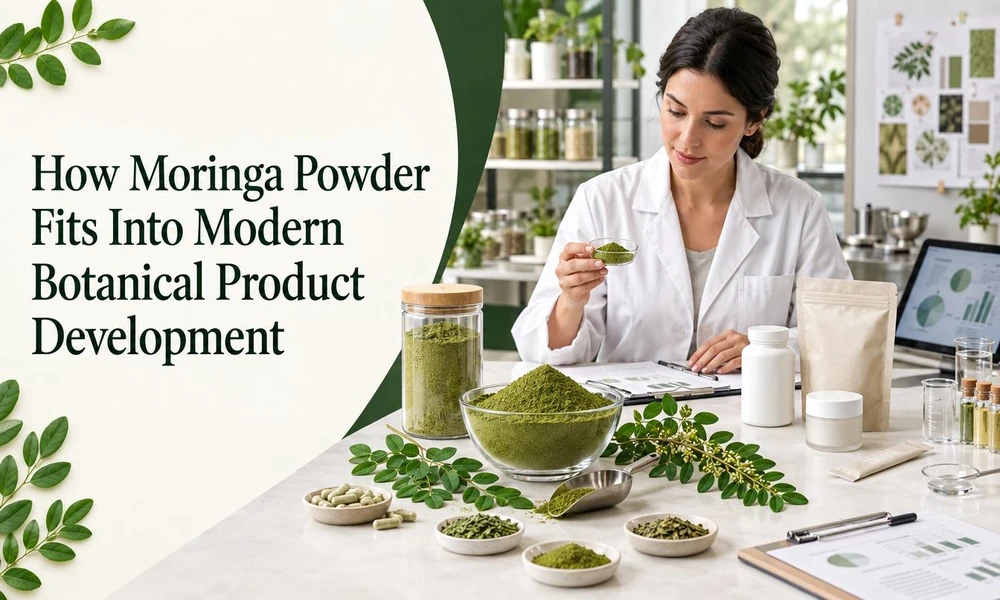
Moringa has come a long way from being just an ingredient known as the superfood of a region to becoming an ingredient that is a consistent feature in formulation notes for supplements, foods, and beverages. Knowing about moringa powder product development involves more than just knowing that it is highly nutritious; but also that you understand how this particular ingredient behaves when it is put into an actual production setting from blending equipment to shelf-life testing.
For product developers and bulk ingredient buyers, the value of moringa lies in its versatility. Moringa leaf powder can be easily incorporated into various products without necessarily going through the same special processing that is normally done for the extraction of plant concentrates. Its natural color, distinctive flavor, size of the particles, moisture content, and nature of the raw material are some factors that must be taken into consideration before it is introduced into a finished formulation.
Moringa’s Place in the Clean-Label Movement
The development of clean-label formulation has been at the heart of such development. Companies looking for natural, minimally processed ingredients find it attractive to moringa clean label formulation since the plant can offer its rich nutritional content without going through any process of chemical extraction to provide a nutritionally rich profile, and the ingredient panel can easily be read without any added processing aids.
The Nutritional Profile Formulators Care About
What makes the ingredient genuinely useful, though, is its composition. A well-documented moringa nutritional profile formulation typically references:
- Powdered moringa leaves are well known for their relatively high content of proteins when compared to other botanical ingredients that come from leaves.
- It has a good amount of all types of amino acids.
- Moringa contains naturally occurring vitamins such as A, C and E, although specific levels of vitamins may differ depending on raw materials and processing methods.
- It contains naturally occurring minerals such as calcium, iron, and potassium.
These nutritional properties make moringa a multifunctional botanical ingredient suitable for all kinds of supplements, functional foods, greens powders, and other health products.
Protein, Amino Acids, Vitamins, and Minerals
The protein content in moringa leaves powder is usually between 25% and 30% by dry weight which is considered a very high proportion when compared with similar plants whose leaves are used as a source of protein and is also comparable to that of certain legumes used as protein sources. The amino acid composition has some important essential amino acids at ratios that make moringa a reasonable protein quality contributor in plant-based blends, along with a high micronutrient profile that formulators commonly refer to in their marketing material and technical documents.
Where Moringa Powder Works in a Formulation
The position of the ingredient in the formulation depends greatly on the type of product and dose to be delivered. For brands that are developing moringa in botanical formulations, should consider whether the profile of the leaf’s taste and appearance in the end result, or whether a different option should be used that will form palatable moringa taste, without changing the composition of the entire blend significantly.
Capsules, Tablets, Greens Blends, Bars, and RTD
Common formats include:
- Capsules and tablets: When manufacturing solid formulations, dose size, flow properties of powder, bulk density, and compressibility have to be considered.
- Greens blends: Moringa can be combined with other green leafy plants, fruits, vegetables, or even plant powders according to the green nature of the product.
- Nutrition bars: Moisture stability, particle size, bindability, and flavorability need to be considered.
- Ready-to-drink beverages: Formulation and shelf-life testing needs to consider dispersion, sedimentation, mouthfeel, and flavoring.
- Powdered drink mixes: Moringa can be formulated into powdered drinks, but its dispersibility and flavorability have to be considered too.
Formulation Challenges: Taste, Color, and Blending
Taste and color create the most persistent problems in formulation. Moringa has an earthy and somewhat bitter taste along with green coloration that is likely to overshadow the final product’s taste and color when added, especially in beverages and bars where it may become necessary to utilize masking agents or flavors of fruit.
Sourcing usually begins with the format. Purchasers utilizing bulk moringa leaves powder have more options when it comes to capsules, tablets, and blends because the full-leaf format ensures that the widest range of nutrients is present and can be incorporated into any standard process line without needing any special machinery.
Leaf Powder vs Extract vs Seed Oil
Seed-derived material serves an entirely different purpose. Moringa seed oil is pressed rather than dried and ground, and it’s typically used in cosmetic and topical applications rather than nutritional ones, given its fatty acid profile and skin-conditioning properties, which differ substantially from the leaf’s nutrient and fiber composition.
Quality Markers That Affect Formulation
Formulation outcomes rely greatly on the consistency of raw materials used. The consistent use of moringa leaf powder ingredient will have to be proven through documentation of its particle size, coloration, and moisture content since variation in any of these factors can affect blend uniformity, shelf stability, and finished-product texture across production runs.
Leaf Purity, Color, Mesh, and Moisture
Buyers should confirm several specific markers before committing to a lot:
- Leaf purity: The material should contain minimal unwanted stem, petiole, or foreign plant material according to the agreed specification.
- Color consistency: Consistent natural green coloration can help maintain a uniform finished-product appearance. Changes in color should be investigated rather than automatically interpreted as a quality failure.
- Mesh size: This is dependent on the intended use of the material, especially capsules, tablets, and powder mixtures.
- Moisture content: Moisture control aids in ensuring appropriate storage and flow.
- Microbial quality: Testing needs to be appropriate for the particular product and destination market.
- Heavy-metal and contaminant testing: RSafety aspects need to be confirmed by appropriate testing and documentation.
Sourcing and Sustainability Considerations
Sustainability has now become an actual factor when it comes to sourcing rather than a secondary marketing term. Moringa trees are fast-growing and require just a fraction of the water than many other crops do. Moringa is cultivated by smallholder farming communities in various parts of Africa and South Asia. These same growing regions also supply moringa seed oil, alongside leaf powder and seeds. Therefore, moringa for supplements and foodsourcing is one of the supply chains able to make sustainable sourcing with meaningful environmental and social outcomes when managed responsibly.
Frequently Asked Questions
Q: What makes moringa powder attractive for product development?
A: Nutrient-rich nature, low processing requirement and clean label positioning, all these things make it an attractive option. It offers protein, vitamins and minerals without any derivatives and chemicals.
Q: Where does moringa powder fit best in formulations?
A: It can be used in capsule form, tablet form, greens mixes, nutrition bars, and ready to drink beverages based on the compatibility of its taste, color, and dosage in a particular product.
Q: How do I manage moringa’s taste and color in a product?
A: Taste combinations, masking agents, and encapsulation process can overcome its earthy and bitter taste and intense green color, especially in beverages and bars.
Q: Leaf powder, extract, or seed oil, which should I use?
A: Leaf powder is ideal for whole food nutritional formulations; extract works well for high-concentration formulations; and seed oil should not be used for nutritional purposes.
Q5. What quality markers should I check for moringa?
Confirm leaf purity, color consistency, appropriate mesh size, and moisture content low enough to prevent caking, alongside documented testing for microbial and heavy-metal safety.
Partnering for Reliable Moringa Supply
The decision of which supplier to choose for the bulk moringa powder for brands is based on documents, consistent supply, and openness regarding the place of origin and processing methods. Those buyers that value proven specifications and reliable suppliers more than the cheapest offer will not face reformulation problems due to unreliable raw materials.
